
13 questions to ask your wedding photographer
13 questions to ask your wedding photographer
It's important to find out about a photographer and the way they work before choosing to hire them to photograph your wedding. Here are some of the key questions which you should ideally ask before making that important decision.
1 Can I see some references from previous clients who you’ve shot weddings or other events for?
It’s essential that your wedding photographer has a proven track record of high quality work, and can demonstrate this with a string of testimonials. If they say they have photographed lots of weddings, but are unwilling or unable to provide testimonials, then this should set alarm bells ringing. You can read some of my reviews here.
2 How would you describe the style of photos you take?
Many photographers specialise either in posed, formal pictures, or in reportage style candid images. My preference is to go for a mixture of both. The whole group pictures take a bit of time to set up, but it’s great to have some pictures showing all the guests who were there together. It can be useful to see how other people describe a photographer's work, rather than just how they describe themselves. For example, here's the link
3 Do you provide a contract for wedding photography, and if so, what’s in it?
The contract is your guarantee that the photographer really is going to show up and do what was agreed for the price that was agreed. You can see an example of a contract for wedding photography that I use here.
4 What equipment do you have? What is your second camera?
As you want to get some really good quality photographs of your wedding, it’s worth checking what camera the photographer is using. Ideally, the photographer should have a professional quality camera, such as a Nikon D810 (which I use) and a range of lenses. It’s also worth checking if your photographer has a back-up camera, as even the best cameras in the world are prone to occasional failure. In case of backup, I have another Nikon camera and a Canon 60D. I’ve never had to resort to using them, but it’s good to know they’re available just in case.
5 Do you have lighting equipment, and if so, will you bring it?
Serious photographers will have a quality flashgun (also known as a speedlite), and use this in preference to the camera’s rather weedy pop-up flash. I use a Nikon SB910, along with a diffuser, in order to get a softer light. I also have top quality Profoto studio lights, which can be brought to a wedding venue (if agreed in advance). One great thing about these is that there are no cables to worry about.
6 What happens if the photographer is ill on the day?
I’ve never had to miss a shoot due to illness (tough wood), but you never know. Every photographer needs a backup plan, and mine is my husband Anthony, who would be available to cover the wedding, so there would be no need to rearrange anything.
7 Do you shoot in RAW or JPEG?
Without getting too technical, RAW photos contain more detail but need more editing afterwards, when they will be saved as JPEGs. To get the best results, it’s recommended that photographers shoot in RAW mode (which I do). Any serious photographer is very unlikely to take photos in JPEG mode, but it’s worth checking before you choose a photographer, in order to be sure of getting the best results.
8 What's the point of having a pre-wedding meet-up between the photographer and the couple?
This is a great opportunity for the couple to meet up with the photographer at the actual venue. As well as providing a chance for us to get to know each other a bit, it allows to scout for suitable locations for photos to be taken on the actual day and discuss the must-have shots to ensure that everything goes smoothly.
9 If it’s a long shoot, how often will you need to take a break?
Photographers are only human, and will need the occasional comfort break! Some weddings can last 8 hours or more, and it’s worth clarifying before the event what, when and where the photographer will eat, for example. For longer shoots, I bring a snack with me, which I keep in the car, so I wouldn’t be expecting the couple to provide me with food. Feeding the guests is a hefty cost as it is, and I have no wish to add to that!
10 How long will I need to wait after the wedding until I can see the photos?
This is worth clarifying with the photographer. I would expect to have the edited digital files ready within a week of the event; any printed photos would take longer.
11 Do you have a website which family and friends can order prints, albums etc from?
Yes, I use a platform called Zenfolio, which enables me to make digital files available for download, and for prints and albums to be ordered.
12 Can the guests take photos too?
Yes of course, it’s natural that your guests will want to take pictures, and I’m all for that. I do just ask though that precedence is given to the professional photographer, and guests ensure that his or her view isn’t obstructed.
13 There are some shots and groupings of guests that I’d really like pictures of. Is that possible?
Absolutely. And the pre-wedding meet-up at the venue is an ideal time to go through these must-have shots. It's really helpful if there's someone (like an usher or bridesmaid) who can help arrange the groupings, especially if this person knows a lot of the guests.
Anyway, I hope that is helpful. If you would like to enquire about hiring me as your wedding photographer in or around Bath, or about anything else, then do please get in touch.
Cover photo for Bath Life Magazine
I've done a lot of shoots for Bath Life Magazine over the last couple of years, and was recently asked to do a rather unusual assignment: to photograph words baked out of bread by Bath's master baker, Richard Bertinet. The theme of issue 342 of is the great outdoors, and Richard had baked the phrase 'al fresco in Bath' out of bread. My task was to arrange and photograph these words for the front cover, creating a bold and striking design.


Here are some of the different options I submitted to Bath Life:


And here's the finished result:

Bath Life Magazine issue 342, with cover photography by Beata Cosgrove
I'm looking forward to picking up a copy soon!
Best rated photographers in Bath
Beata Cosgrove rated as one of the top three photographers in Bath
With so many really competent professional photographers in Bath, I'm really pleased to have been chosen by the ThreeBestRated website as one of the top three photographers in Bath.
Unlike many web directories, ThreeBestRated doesn't publish recommendations in exchange for payment. Instead, they closely scrutinise the work of photographers (and driving instructors, plumbers, accountants etc). They check for evidence of consistently high quality work, customer reviews and satisfaction, reputation and value for money, and I am delighted to have been chosen by them as one of the top three photographers in Bath, as judged against their stringent criteria.

Screenshot showing ThreeBestRated's recommendations for Bath's three most positively reviewed photographers, including Beata Cosgrove Photography
Here's the link: https://threebestrated.co.uk/photographers-in-bath
And here are some reviews of my work, which have enabled me to get this recommendation: https://www.google.co.uk/search?q=beata+cosgrove+photography&oq=beata+cosgrove&aqs=chrome.2.69i57j35i39l2j69i60l3.6096j0j7&sourceid=chrome&ie=UTF-8#lrd=0x48718118303084e1:0xca52fd40ab1838b9,1,
Clearly, having a strong online presence is key to a photographer just as it is to any businessperson, and I'm really glad to also be featured on the Wedding Secret's webpage:https://www.theweddingsecret.co.uk/beata-cosgrove-photography-wedding-photography-bath.html
Bath portrait photographer is ready to create a unique profile picture for you.
Your profile picture says a lot about your personality
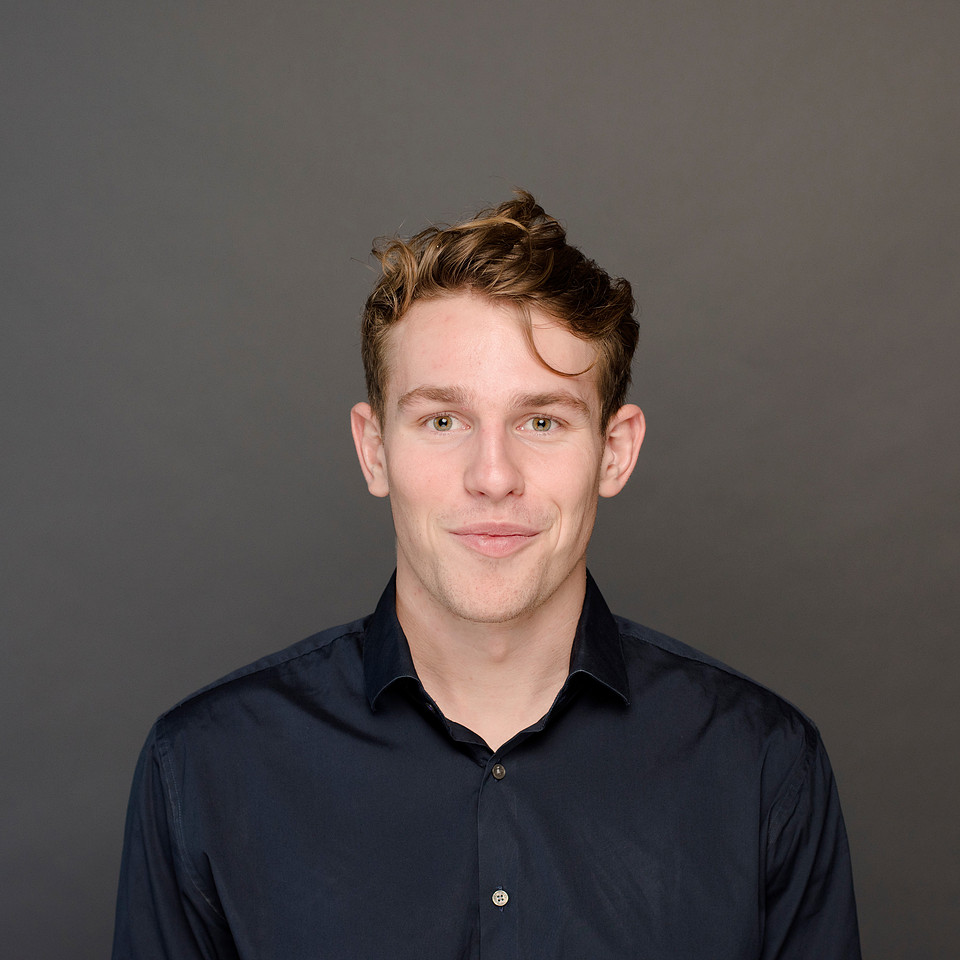 Research carried out by LinkedIn shows that just having a profile picture on your LinkedIn page makes you 14 times more likely to have your profile viewed. Your photo is one of the most important parts of your LinkedIn profile, and your photo says a lot about your personality and – how presentable you are, how approachable and professional you appear, and so on.
Given all this, it’s imperative that you do include a photo in your LinkedIn profile, and that you use one that does you justice. It goes without saying that by using a low-quality photo, perhaps a selfie or one taken with your computer’s built-in camera, you may well be selling yourself short.
Here are some tips from the local photographer near you for getting top quality pictures for your profile:
1 Dress professionally
When having your profile photo taken, wear the kind of clothes that you’d wear when at work. This helps you to look the part and enables the person viewing your profile to image they’re meeting you in your professional role.

2 Use an uncluttered background
If getting a photo taken in your home or workplace, do be mindful of background clutter which might be visible behind you. You might not have noticed that pile of washing up behind you or your colleague’s jacket strewn across a chair, but anyone looking at your picture almost certainly will. As a professional photographer, I often use rolls of white or grey background paper for this. Alternatively, a clear wall (without pictures on) works well, as does a background with a simple regular pattern such as stone or brickwork, perhaps out of focus, concentrating attention on the subject.

3 Spend time getting the job done properly
It’s common for people to use the same profile picture across all their social media accounts. So they paste their Facebook profile picture into their LinkedIn profile. But consider for a moment your social traits that define what you’re like as a friend or how you interact with people at a party. And then think what it is you can offer people in your professional life. The odds are that you identified two very different sets of characteristics. This reflects why it’s probably worth having a different profile picture for your ‘professional’ social media page from the one you use when you’re liking dancing cat videos. It takes a bit more time and effort, but should be well worth your while.

LinkedIn themselves recommend getting a photograph taken professionally. Beata Cosgrove Photography in Bath can do this for you, delivering great pictures at very reasonable prices. You can see more of Beata's portrait photography here or contact Beata directly.
5 best spots for night-time photography in Bath
Everyone knows that Bath is a lovely city to visit and a real privilege to live in. For its size, it really punches above its weight - it only has about 85,000 inhabitants, and so is only just big enough to be considered a city at all. But it's still the 12th most visited city in England - as well as one of the most photographed and most recognisable, with its iconic crescents, Abbey, and one-off structures such as Pulteney Bridge. Hundreds of people can be seen snapping away all day long throughout Bath, yet once the sun goes down, almost all of the cameras tend to get put away. But I wonder if many of these keen photographers are actually missing a trick, as Bath is no less photogenic by night, provided you've got a sturdy tripod - and know where to head for.
Here are my 5 favourite spots for night-time photography in Bath.
1. Bath Abbey

This sturdy, late Gothic structure is lit up in the evening, which is an ideal photo opportunity for dusk photographers. With a tripod and an obliging motorist, you can get a light trail leading into the photograph, as I've done here. I always think that vehicles' rear (red) lights make for a more interesting photo than the front (clear) lights. In Bath's labyrinth of one-way streets, it's worth bearing in mind which way(s) the traffic will be heading if you want to capture a light trail in your picture. This photo is taken by the A3039 outside the imposing structure of the Empire Hotel on Grand Parade.
In fact, this spot really is a BOGOF, because if you swing round 180 degrees, you come to spot number 2.
2. Pulteney Bridge, Bath

You need to be careful and sensible of course becaue it's quite a drop, but you can get a great view of the weir and Pulteney Bridge, which is remarkable for being one of only four bridges in the world flanked by shops on both sides all the way across. It was designed by Robert Adam and completed in 1774 to connect central Bath with the flourishing new suburb of Bathwick.
Ironically for such a spectacular city, Bath has a limited number of truly impressive riverside structures to tempt the photographer. Pulteney Bridge is the best known, but there is another just round the corner that is often overlooked.
3. Riverside buildings on Lower Bristol Road, Bath, photographed from across the river, close to Avon Street car park

With the River Avon on one side and the Lower Bristol Road and railway on the other, these structures are very reminiscent of another Bath, which was once a thriving industrial town as well as a genteel spa. With a tripod and ND filter, the water is smooth and mirror-like, creating harmonious reflections.
But don't get too comfortable - as there's a steep hill to climb for the next location!
4. Alexandra Park viewpoint, Bath

There are likely to be other photographers up here during the day, but when the sun goes down you'll probably have the whole place to yourself. I think this has to be the best panoramic view of Bath and its surrounding hills, and well worth the climb. If you spot a light glowing different colours on the other side of the city, there's a good chance that'll be our next and final spot.
St Stephen's Church, Lansdown, Bath

Occupying a commanding spot on the north side of the city, St Stephen's Church is one of Bath's finest Gothic buildings, and its abundance of pointy towers make it a good subject to photograph.
Anyway, happy photographing - and remember to take a tripod!


